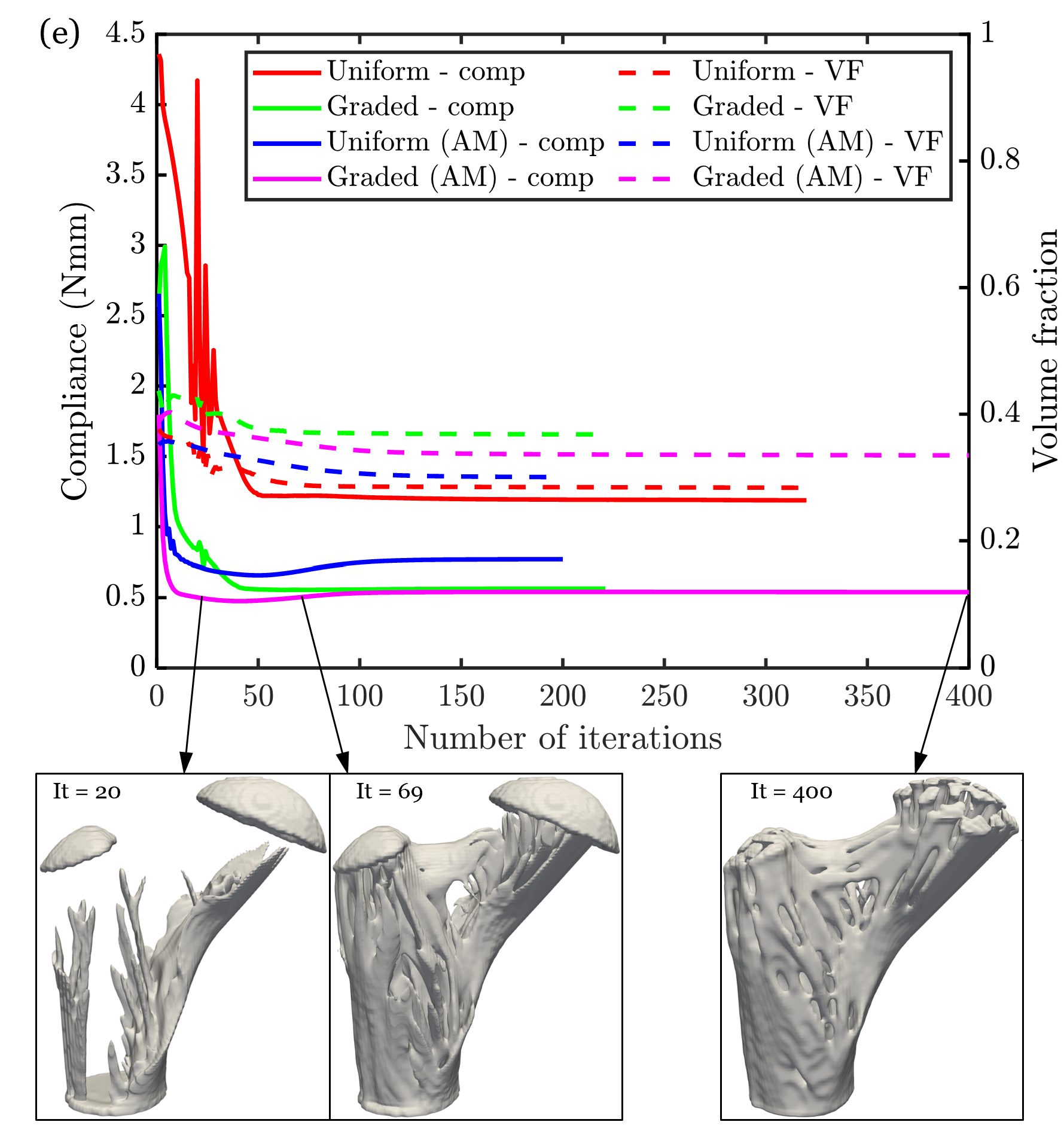
Optimization history of a topology-optimized graded porous
bone implant
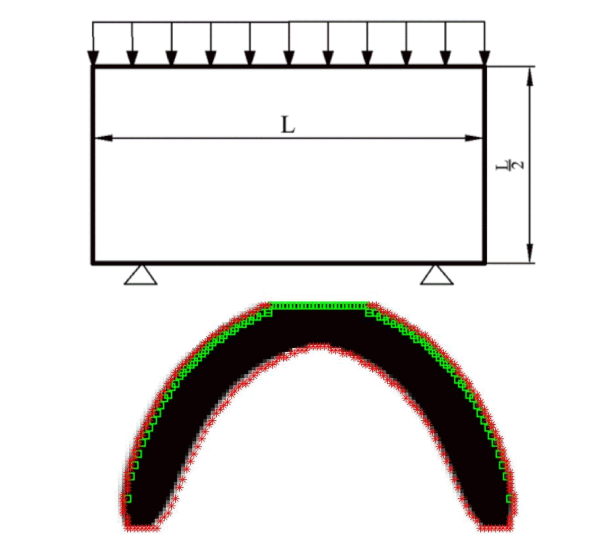
Topology optimization of a structure under externally loaded design-dependent pressure loads using the BILE model implemented using a custom Matlab code.
Lattice and Porous Structures
With the advances in additive manufacturing technologies to produce structurally complex yet functional features, lattice/porous/infill structures have become a viable means for design applications that cover lightweighting, composities/meta-materials, bone scaffolds, implants, impact absorbers etc. They possess great strength-to-volume ratios for rigid applications and high surface areas (triply periodic minimal surfaces or TPMS) for heat transfer applications. Depending on the application, we design structures using periodically or randomly distributed lattice cells or through novel infill-based topology optimization approaches.
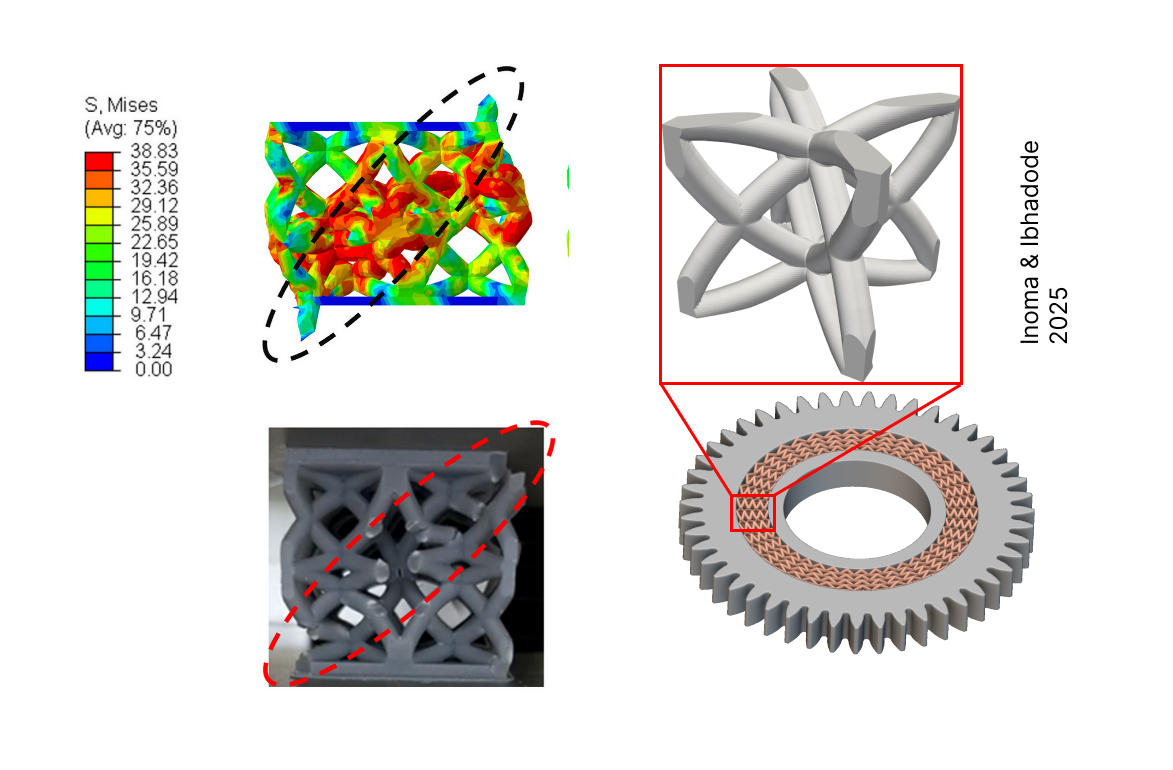
Novel dual curved cubic lattice structure
with improved compressive strength relative to the
BCC and Octet
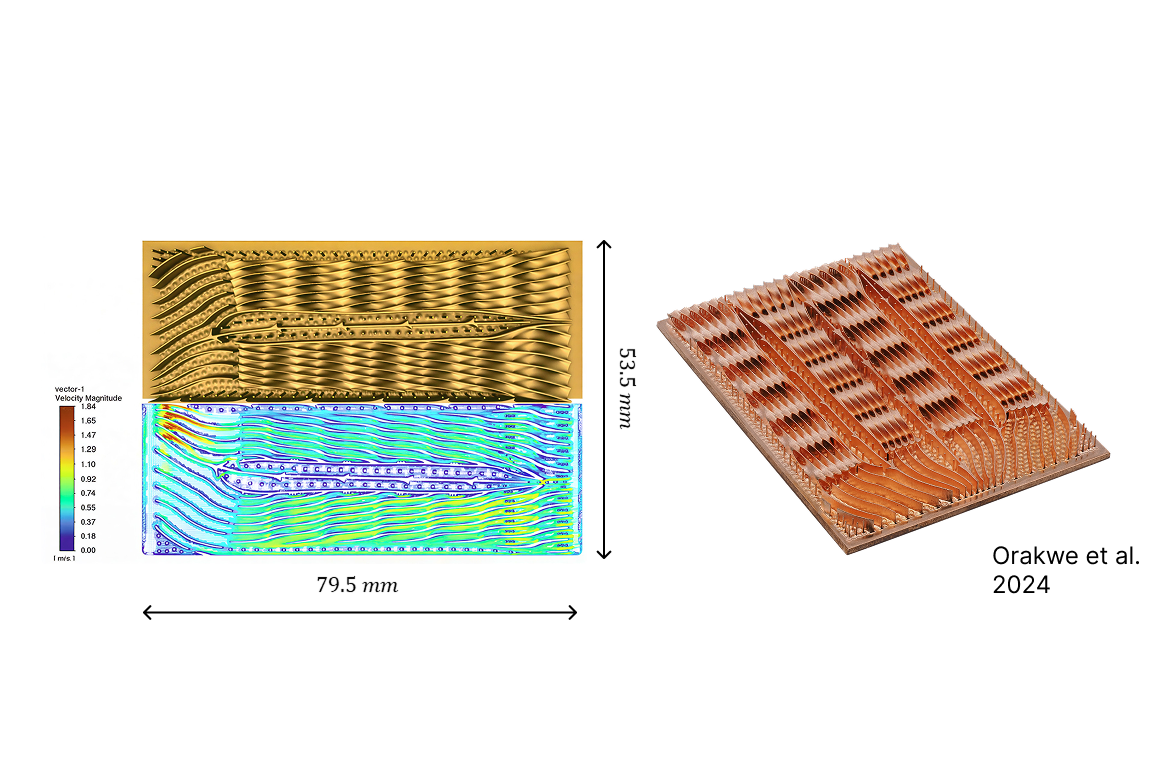
Multiscale architected design of a novel heat sink combining
topology optimization and minimal surfaces
Additive Manufacturing Process Modelling and Constraints
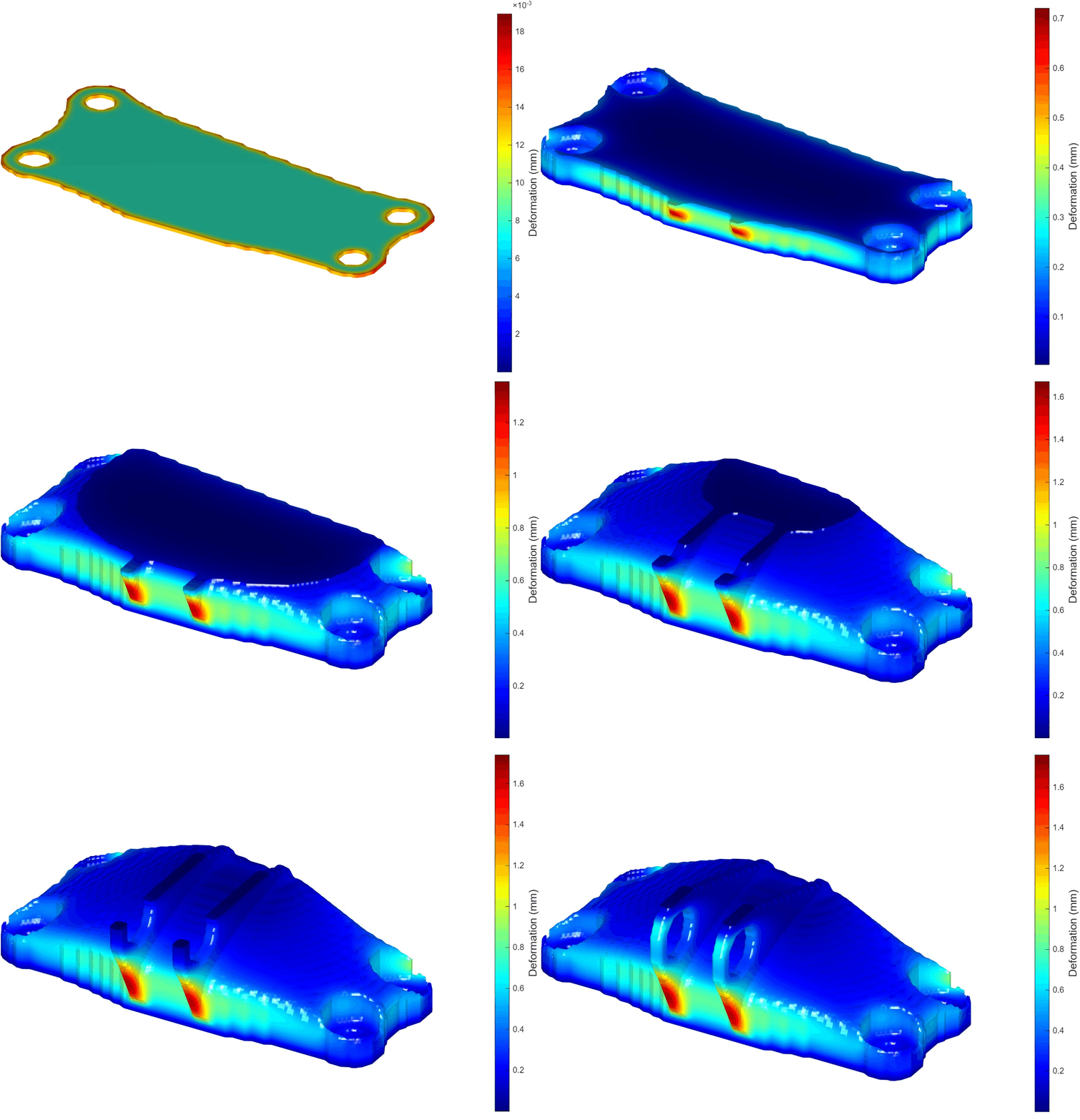
To ensure a design is manufacturable, modeling the process is pertinent to first investigate the response of the structure during and after printing (deformation, residual stress). Beyond this, the process responses can be captured within the structural design methodology to mitigate severe manufacturing defects during and after production.
Considering this, we are focused on developing fast small- and large-scale process models to predict deformation and residual stress profiles and integrate the process mechanism within topology optimization to ensure the design conforms to the manufacturing process.
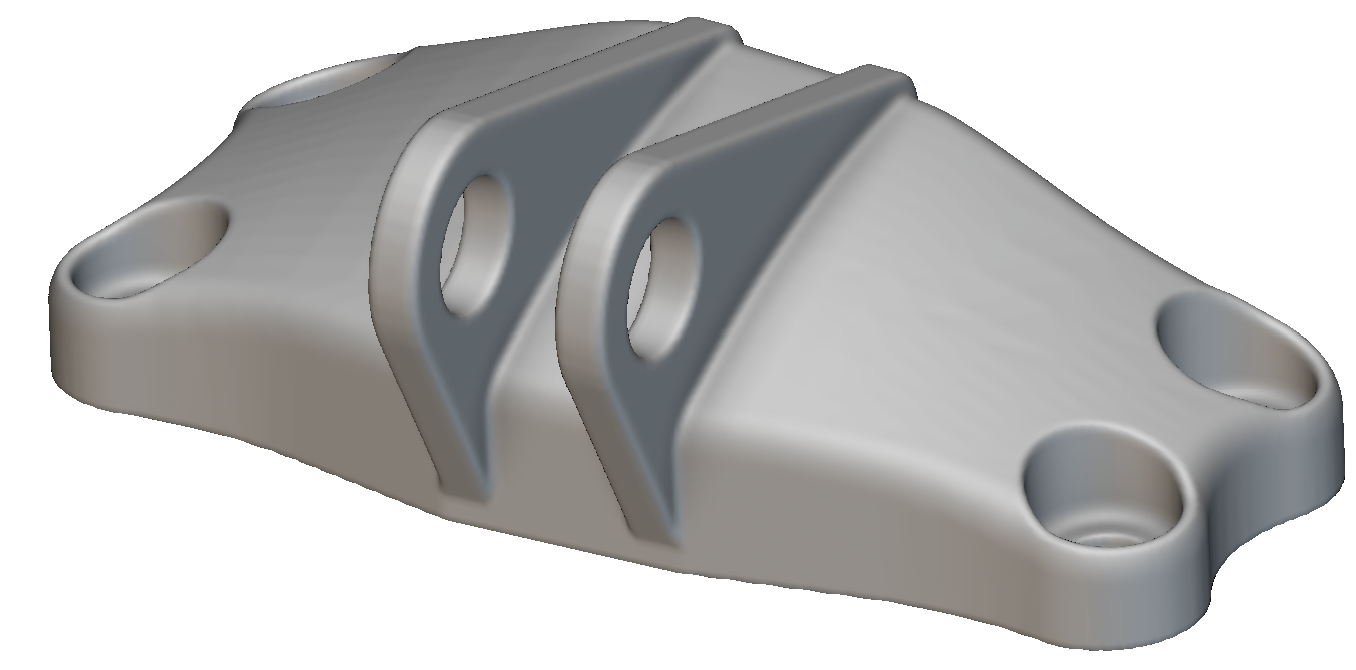
Novel dual curved cubic lattice structure with improved compressive strength relative to the BCC and Octet
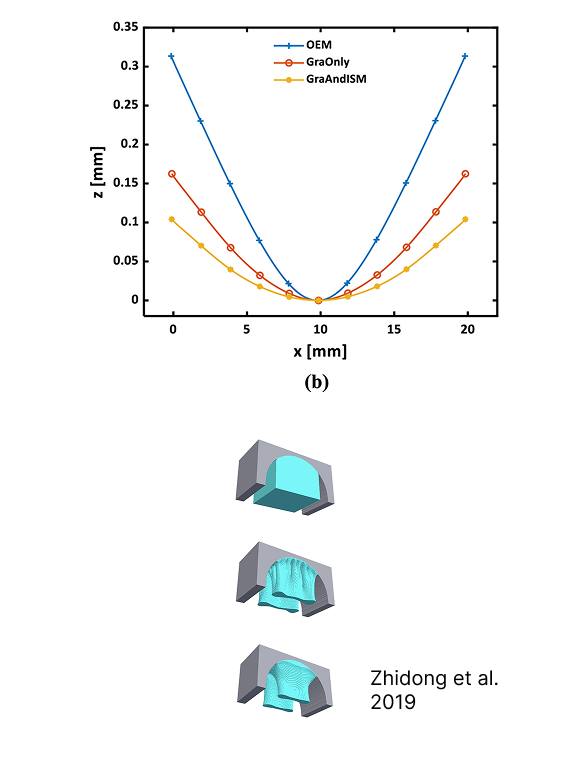
Influence of LPBF residual stress-constrained topology-optimized support
structures (GraAndISM) on in-situ z-deformation compared to OEM and topology optimized supports
Open Access Software
A key objective in the multifunctional design and additive manufacturing lab is the development of software tools (mainly open source) that can aid teaching and research. Our goal is to make several nascent design techniques available to researchers, teachers, engineers, and designers to ensure the diffusion of knowledge and obtain feedback for technology enhancement. These software tools will cover topology optimization, fast AM process models, implicit modeling, and design decisions. Check here for the GitHub repositories of our available software.
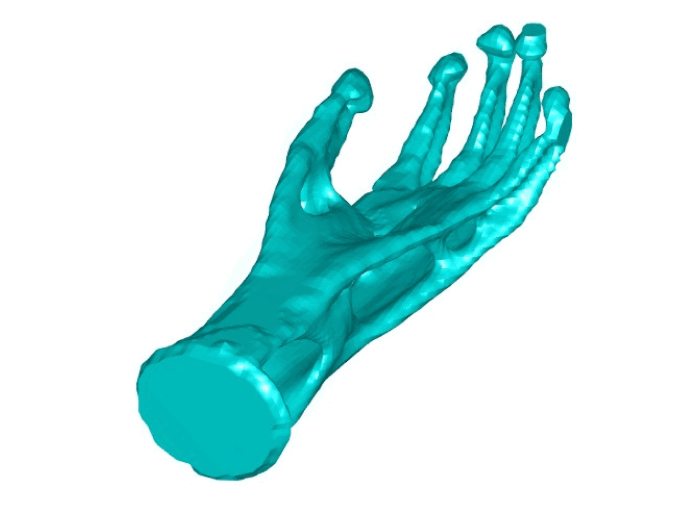
FreeTO- Freeform Topology Optimization (3D topology optimization through a structured mesh with smooth boundaries).
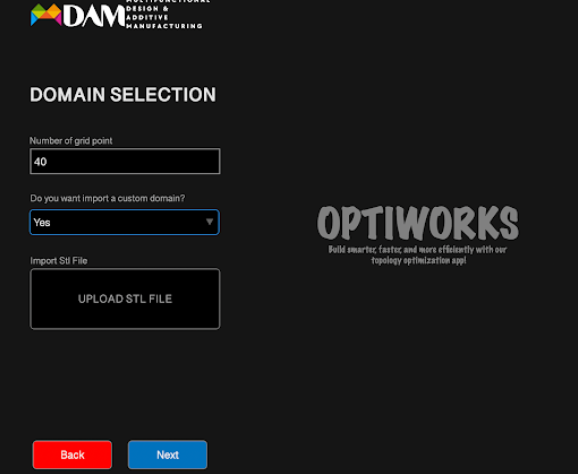
OptiWorks – A simple software solution for Topology Optimization
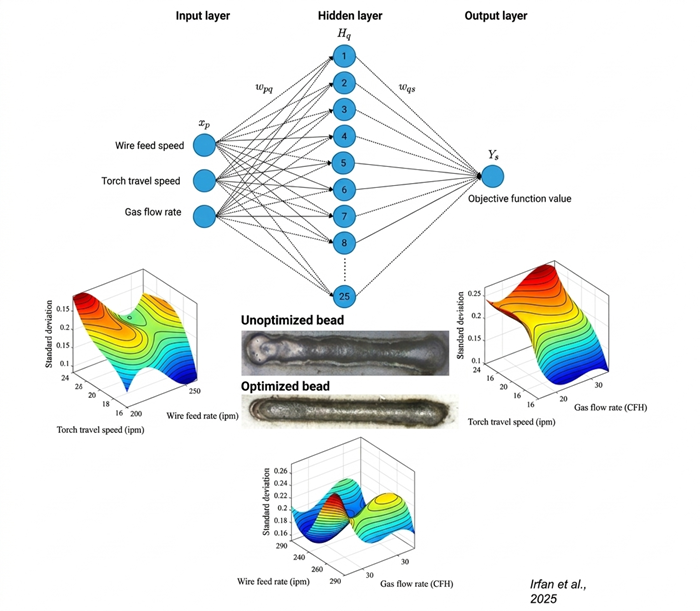
AI-Assisted Design and Process Optimization
Convolutional Neural and Generative Adversarial Networks (CNN and GANs) have been investigated to upscale the use of topology optimization. While there is room for improvement in that area, we aim to develop process data-driven surrogate AI models in topology optimization. Deep learning models (e.g., CNN, GANs) will be employed to resolve classical topology optimization problems, and to predict process-based responses (e.g., hot and cold spots based on data from photodiode or optical tomography signals) to be tied back to topology optimization.